Project management software delivers the highest value in industries where work is complex, timelines are tight, teams are cross-functional, and outcomes must meet strict quality or regulatory standards.
Sectors such as construction, IT and software, healthcare, manufacturing, and finance depend on structured planning, real-time visibility, and reliable coordination to deliver large-scale projects.
In this article we’ll explore main industries that benefit most from project management software and take a look at best software tool for each.
How industries benefit from project management software
Here are industries that rely heavily on project management systems to organize workflows, maintain accountability, and align teams around shared goals.
Construction and engineering
Construction and engineering projects involve long timelines, multiple subcontractors, strict budgets, and constant dependency management. Project management software helps teams plan schedules, coordinate on-site and off-site resources, track costs, and monitor milestones across phases.
Centralized documentation and progress tracking reduce delays, prevent miscommunication, and improve accountability on complex infrastructure projects such as roads, bridges, and commercial buildings.
Information technology and software
IT and software development teams use project management tools to manage Agile and Scrum workflows, plan sprints, track bugs, and coordinate feature releases. Without structured project management, software projects are far more likely to miss deadlines or exceed scope.
Platforms like GoodDay and Jira provide visibility into development progress, help balance workloads, and support collaboration between developers, designers, QA teams, and product managers.
Healthcare
Healthcare organizations operate in highly regulated environments where accuracy, traceability, and compliance are critical. Project management software supports hospital operations, clinical trials, IT system rollouts, and process improvements by organizing tasks, tracking approvals, and maintaining audit trails.
It also helps teams coordinate across departments while ensuring regulatory requirements and patient safety standards are met.
Manufacturing
Manufacturing companies rely on project management software to oversee production planning, supply chain coordination, equipment maintenance, and new product development.
PM tools help align engineering, procurement, production, and quality teams around shared schedules and targets. Improved visibility into timelines and dependencies reduces downtime, minimizes waste, and supports consistent product quality.
Finance and banking
In finance and banking, projects often involve regulatory compliance, risk management, system upgrades, and new financial product launches. Project management platforms help track budgets, approvals, documentation, and deadlines across multiple stakeholders.
Clear oversight and reporting are essential in this sector, where errors can lead to financial loss or regulatory penalties.
Marketing and advertising
Marketing teams manage campaigns with many moving parts, including content creation, design, media planning, and performance analysis. Project management software helps organize campaign timelines, coordinate creative workflows, and ensure deliverables are completed on schedule.
It also improves collaboration between internal teams and external agencies while providing visibility into campaign progress.
Energy and utilities
Energy and utility companies manage large infrastructure projects, ongoing maintenance programs, and regulatory reporting requirements. Project management tools help plan long-term initiatives, coordinate field teams, and track compliance-related tasks.
Reliable scheduling and reporting are critical in this sector due to safety requirements and public service obligations.
Why these industries thrive with project management software
PM software is crucial for complex projects, helping manage costs, compliance, and stakeholder needs across diverse operations.
High project complexity
These industries manage projects with many interconnected tasks, dependencies, and stakeholders. Project management software provides structure and clarity where manual coordination would fail.
Regulatory and compliance demands
Sectors like healthcare, finance, and energy require detailed documentation and traceability. Project management platforms support compliance by maintaining records, approvals, and audit trails.
Resource and budget control
Efficient allocation of people, equipment, and budgets is essential for profitability. Project management software helps teams plan capacity, monitor costs, and avoid overruns.
Cross-team collaboration
Large projects involve diverse roles and departments. Centralized tools keep everyone aligned and reduce communication gaps.
Real-time visibility and control
Leaders need up-to-date insight into project status, risks, and performance. Dashboards and reports make it easier to make informed decisions quickly.
GoodDay – project management software companies from every industry rely on
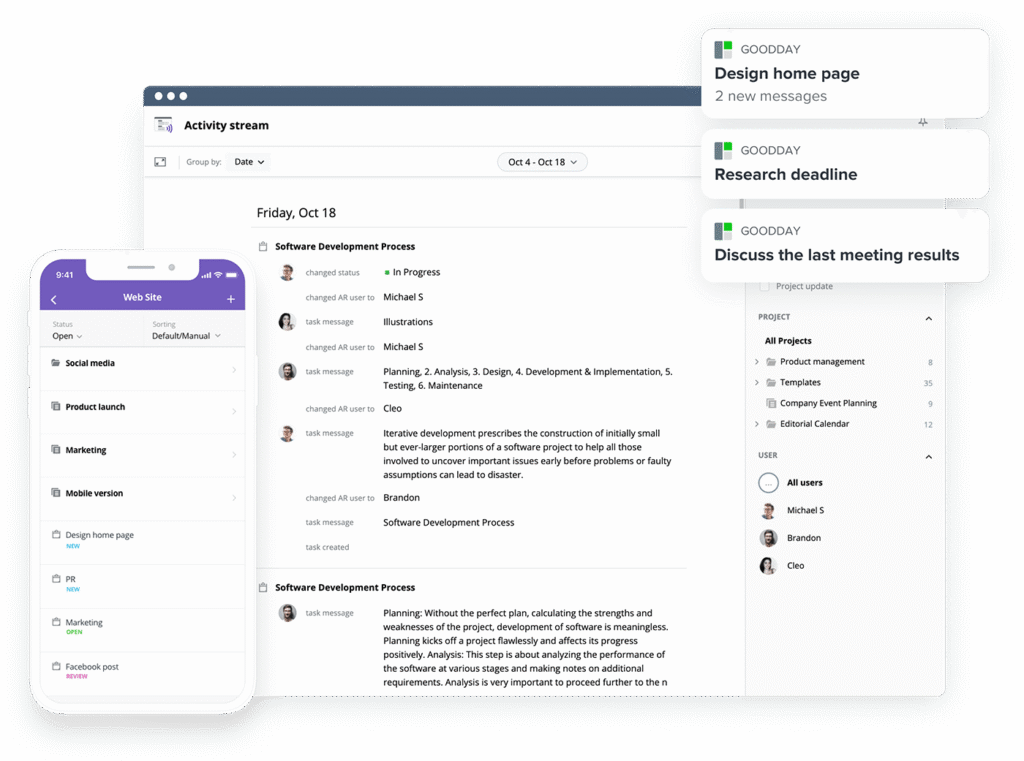
GoodDay is an all-in-one project management software that is trusted by Fortune 500 companies, startups and businesses of all sizes all over the world. It is designed to work across industries rather than being tied to a single vertical.
Companies use GoodDay to plan campaigns, manage content workflows, track deadlines, and collaborate across channels in one structured workspace.
The platform is widely praised because it strikes the rare balance between powerful features and affordability. GoodDay is recognized as a top-rated tool in 12 Capterra shortlists in 2026.
You can try GoodDay for free to see how it fits the way you work.
And if you have any questions, our team is always here at info@goodday.work
FAQs
Which industry uses project management the most?
The construction industry relies on structured project management more than most sectors due to long timelines, strict budgets, and many dependencies. A construction project manager coordinates contractors, materials, safety requirements, and schedules across multiple phases. In this environment, project managers are essential to prevent delays and cost overruns. GoodDay helps centralize schedules, costs, and collaboration in one system.
What industries need project managers?
Industries such as healthcare, IT, manufacturing, the finance sector, and legal services all depend on organized delivery of complex work. As organizations grow, they often hire project managers to bring structure and accountability to operations. These roles ensure coordination across departments and external stakeholders. GoodDay supports diverse industries with adaptable workflows and clear oversight.
What is the most common software used in project management?
Today, cloud-based project management software is the most common solution across industries. According to the Project Management Institute, digital platforms significantly improve visibility and delivery outcomes. Teams prefer software that supports planning, tracking, and collaboration in real time. GoodDay stands out by combining simplicity with advanced features in a single platform.
What are the top five project management tools?
Popular tools typically include platforms designed for planning, collaboration, reporting, and scalability. Project management professionals evaluate tools based on flexibility, ease of use, and long-term value. While many tools serve specific niches, not all scale well across departments. GoodDay is often chosen because it adapts to different team sizes and industries without added complexity.
What are the top five project management methodologies?
The most widely used methodologies are Waterfall, Agile, Scrum, Kanban, and Hybrid models. Each approach requires strong project management skills to apply effectively in real-world scenarios. Clear project planning is critical regardless of the chosen methodology. GoodDay supports multiple methodologies within the same workspace.
Which software is best for project management?
The best software balances ease of use with advanced capabilities such as resource management and reporting. It should help teams align daily tasks with broader project goals. Many tools offer partial solutions but require add-ons to scale. GoodDay delivers an all-in-one experience that works across industries.
Which project management software is most used?
Adoption trends show that flexible, cloud-based platforms dominate usage across sectors. These tools enable collaboration among team members and support real-time updates. Adoption often depends on how quickly teams can onboard and scale. GoodDay’s intuitive design helps teams adopt it faster than complex alternatives.
Which tool is most commonly used for project management?
Most organizations rely on centralized tools where project managers work with shared data and dashboards. These systems coordinate tasks, timelines, and reporting for activities such as marketing campaigns and internal initiatives. Spreadsheets are increasingly replaced by dedicated platforms. GoodDay provides a single source of truth for planning and execution.
Which platform is best for project management?
The best platform supports visibility, accountability, and scalability across industries. It should guide teams toward successful completion without heavy administrative overhead. Organizations benefit most from systems that adapt as projects grow in size and complexity. GoodDay consistently performs well by combining clarity, flexibility, and control.